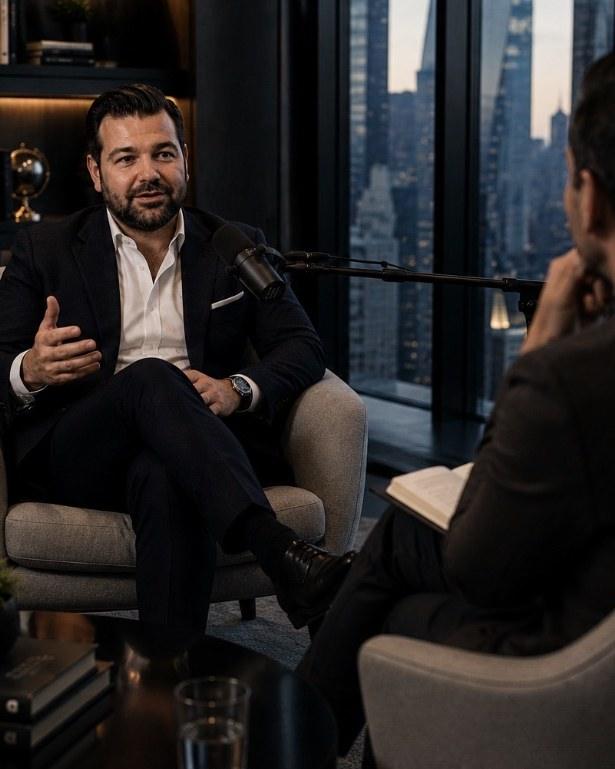
Ron SmithFounding Partner
Ron Smith, Founding Partner
To the owners and families we serve,
A firm's purpose should be written down before it is tested, so that the people who rely on it can hold it to account. This letter sets out why Cordis exists and the principles it is built on.
Where it began
I grew up in Vancouver, in my family's heating and cooling business. I washed the trucks before I was old enough to do anything else, and spent my summers in the shop. What I learned there took years to put into words. In a company of that size there is no distance between a decision and the people it reaches. The family, the employees and the town are not separate constituencies. They share one balance sheet, and every decision is entered against all three.
What I saw from the other side
My career took me to the other side of the table: capital formation on Wall Street, private equity, and later AllianceBernstein, where I worked with founders and multi-generational families on growth, ownership and the timing of an exit. I learned how capital prices a company. I learned how thoroughly a disciplined buyer prepares, often for months, before the first meeting, with a model, a playbook and counsel who do nothing else.
I also saw the asymmetry that defines this market. The buyer has done this many times. The owner usually does it once, bringing decades of judgment about the business and very little about the transaction. That gap has nothing to do with intelligence. It is a matter of repetition, and it is expensive. It appears after the letter of intent, when the price is tested against what the documents can prove, and when the tax question and the family question are finally answered by different people, in different months, after the terms are already set.
Why we built Cordis
Large companies take for granted a level of preparation and representation that founder-owned companies rarely receive. Their boards retain advisors who have sat across from every kind of buyer. Their numbers are prepared to be diligenced. Their tax and estate structures are designed before a transaction rather than after it. I built Cordis to give the owners of founder-led and family companies that same standard.
The name is deliberate. Cordis is Latin, the genitive of cor: of the heart. Owners describe a transition in a number, because a number can be said plainly. Underneath it are other things: time, a name on a building, a guarantee they signed, the people who stay employed. Our work begins by establishing what the number is protecting. Only then do we design the structure that protects it.
What we believe
A few convictions govern the firm. Value should be defended on what is durable, rather than on a company's best year. A company should be read the way a buyer will read it, before the market ever hears its name. Every claim should meet the standard of evidence it will face in diligence. And the firm should take only the work it can materially improve. Where preparation or process would not change the outcome in a way the owner would notice, we say so.
How the firm is built
Structure is where principles are tested. Cordis is paid only by the client it represents. A work fee pays for the preparation and a success fee pays for the outcome, so the firm can advise an owner to wait, and mean it. We do not accept success-only mandates. Each engagement is carried by a senior advisor from the first conversation through closing, and the firm stays through the first quarter after the wire. We remain small by choice, because the person who prices a company should be the person who carries it.
What we owe
We owe the owners we represent candor, including when the honest answer is not yet, or not us. We owe their accountants, attorneys and wealth advisors a firm that strengthens those relationships rather than replacing them. And we owe the people who depend on these companies, most of whom will never read a letter of intent, a transaction designed with them in mind.
These are long commitments, and they will be tested. This letter is how we intend to be measured.
Ron SmithFounding Partner