M&A advisory · Lower middle market

The institutional standard for founder‑owned M&A.

You spent a lifetime building it. The sale should be run to the standard the industry measures itself against.

Cordis Global advises founder-owned and family-owned companies, from $5M to $250M in revenue, across the whole arc of a transaction: the years of preparation before it, the deal itself, and the decades after the wire.

Cordis GlobalConfidential · By appointment
Who we are for

You built something that mattered.

Maybe it is a new technology. More often it is the thing nobody notices. The fasteners that hold a bridge together. The parts that keep a plant running. The service a town depends on and never thinks about. You made payroll through the years that were not easy. You are the reason families have a livelihood and a community has a center.

That is not a small thing. To the people whose lives it shaped, it is the thing.

When it comes time to realize what you built, the number should carry the magnitude of it. Making sure it does, so that you and your family thrive in what comes next, is the work we do.

Who we serve

The companies a community is built on.

Founder-owned and family-held, from $5M to $250M in revenue. The businesses that quietly keep a region working, and the families behind them.

Where we start

Owners think in numbers. We start with what they represent.
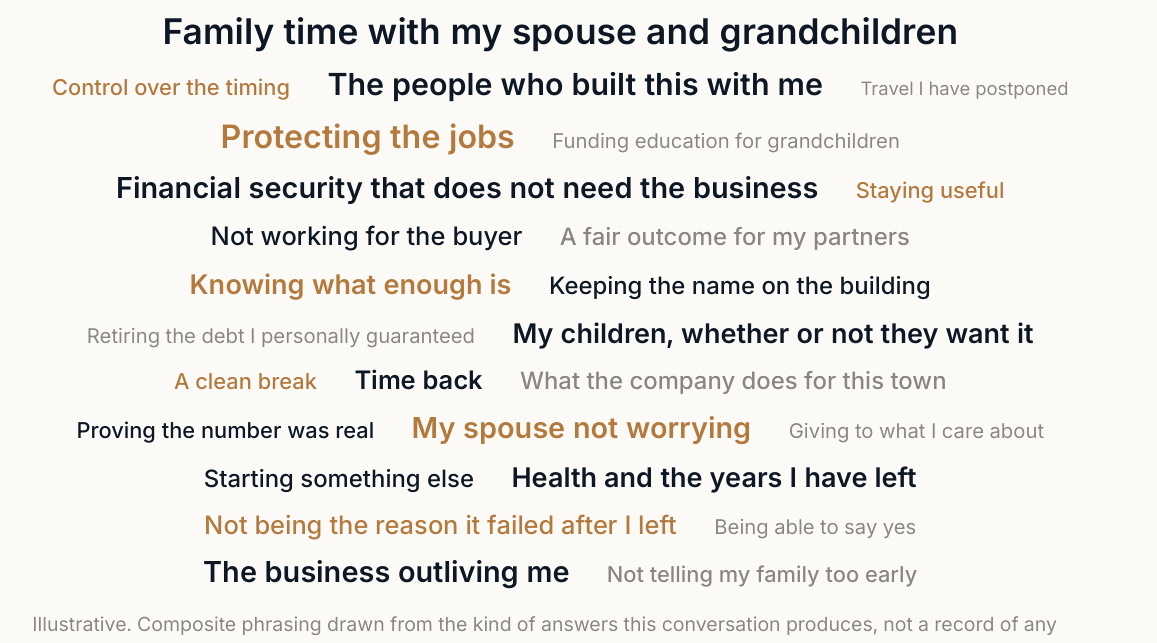
What an owner says matters, in owners' own words: family time, the people who built this with me, protecting the jobs, keeping the name on the building, the business outliving me

A transition gets described in numbers, because numbers are the part that can be stated plainly. What those numbers stand for is what decides whether the outcome was a good one, and establishing it together is where the work starts.


Every firm in this market can model a company. We start with the person who built it, because the people are the work.

The Market
$14trillion
of private business wealth will change hands by 2033, the largest transfer in American history. A fraction of it turns on who was ready.
Exit Planning Institute, 2025 State of Owner Readiness
4.5M
Businesses inside it
0%
Have no written plan, which is exactly where the advantage is built
0%
Of deals carry a price adjustment, and every one is negotiable
One side of the table

Arrives with a playbook.

A corporate development team, standing documents, and counsel who does nothing else.

The other side

Arrives with a business.

They are not unsophisticated. They have never done this before, and they will not do it again.

The other side of the table

We sat where the buyer sits. We can tell you what they will do.

The people who will price your company spent their careers on the other side of this table: Wall Street, private equity, and exit planning inside one of the largest wealth managers in the world. We know the model a buyer runs before the first meeting, the question their accountant asks on day forty, and the retrade that arrives after the letter of intent. Not because we studied it. Because we were the ones doing it.

The negotiating table, seen from the side the buyer sits on
Published in
Forbes · Fast Company
Research
Peer-reviewed, dated, on SSRN
The method
Buyer-Ready · The Off-Market Method
Backgrounds
Wall Street · AllianceBernstein
Two advisors working a client's file together
Why us

A team as sophisticated as the one across the table.

The other side has done this many times. A transaction happens to you once, and it does not wait for a second attempt.

The rigor is table stakes. Institutional underwriting, diligence built to survive the room, negotiation engineered to the terms, brought to the lower middle market. It is the price of being in the room, not what sets us apart.

The difference begins underneath it. Every decision reaches a family, a workforce and a community before it reaches a balance sheet. That is the part the other side never has to understand, and the part we are built on.


Most of what an owner keeps is decided before the market, defended in the deal, and protected long after the wire.

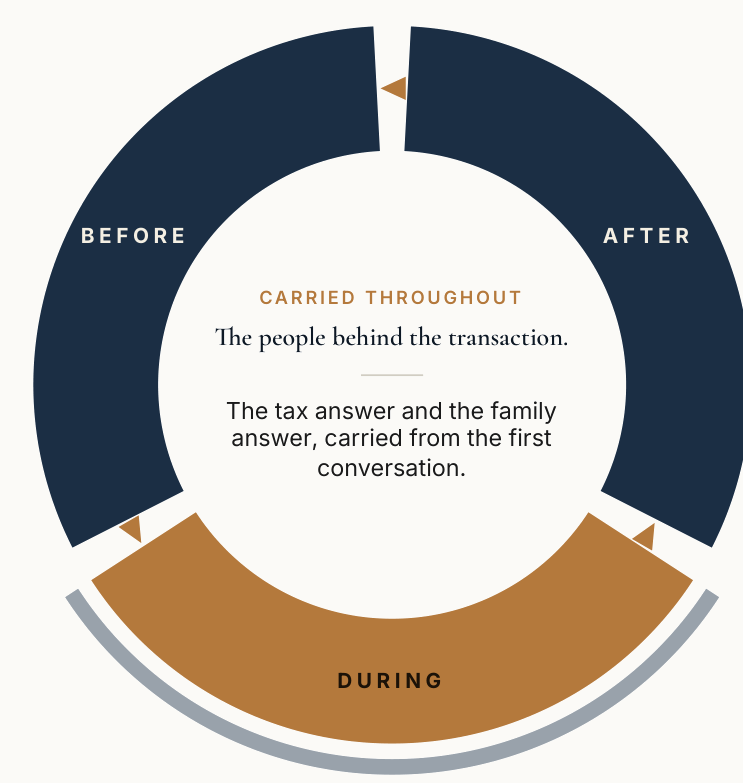
Figure 01 · The Arc

Most firms work the transaction. We work the whole arc.

Value is built before a transaction, proven during it, and protected after. The grey arc is the only phase a transaction advisor is engaged for, and most of what an owner keeps is decided outside it.

The Cordis Phase Wheel. Before, during and after a transaction, with the people behind it carried throughout. The grey arc marks the only phase a transaction advisor is engaged for.
What We Do

Three ways the firm is engaged, and the work that carries past the wire.

Each engagement is scoped in writing, carries a named partner, and ends on a date. Readiness stands on its own, and leads to a mandate only when the numbers say it should.

Readiness

Cordis MRI


What each buyer lane would pay today, what the gap is worth, and the sequence that closes it.

Sell Side

Going to market


Four stages, weighted to preparation. The first two complete before the market hears anything.

Buy Side

Growth by acquisition


A thesis, a proprietary search into companies that are not listed, and a fee fixed before the first approach.

Post-Close

After the wire


Seller notes, earnouts, escrow, and the planning the proceeds now have to carry.

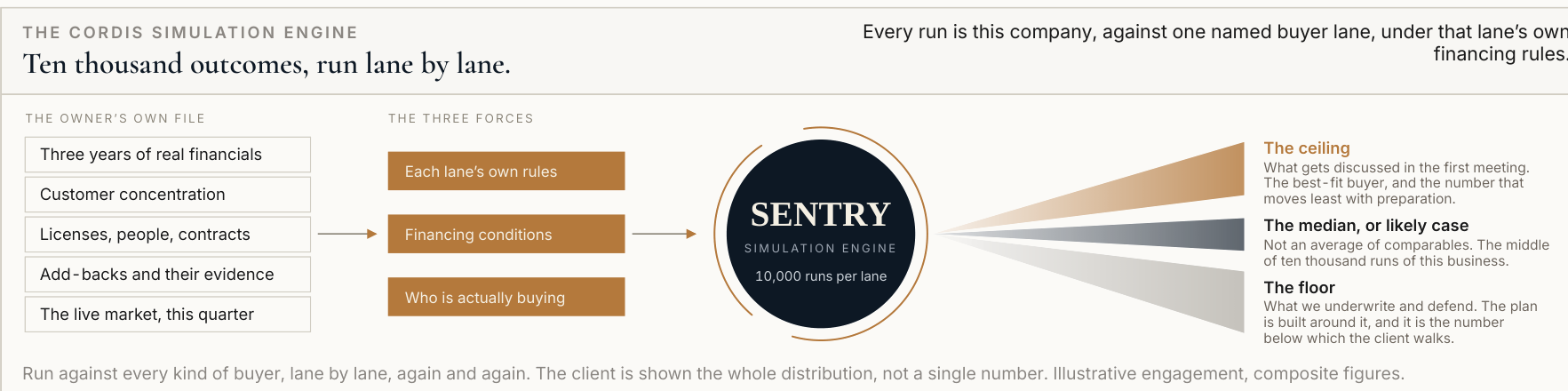
The Cordis simulation engine. Ten thousand outcomes run lane by lane, returning the ceiling, the median and the floor.
The Cordis MRI

The number comes from the buyer's arithmetic, not an opinion.

Before any process begins, the owner's own file is run through the underwriting model of every buyer lane ten thousand times, returning the whole distribution rather than a single number. The floor is the number we defend, and the number below which the client walks.

Research · Quant · AI-native

Built for billion‑dollar deals. Brought here first.

The owner's own file, run through the underwriting model of every buyer lane ten thousand times. Peer-reviewed research, dated and published. A quantitative, AI-native method that until now lived upstairs, reserved for companies from $50 million to the multi-billions, the ones with a corporate development team and a bank on retainer. We brought it down to the businesses that hold up a town, and we brought it first.

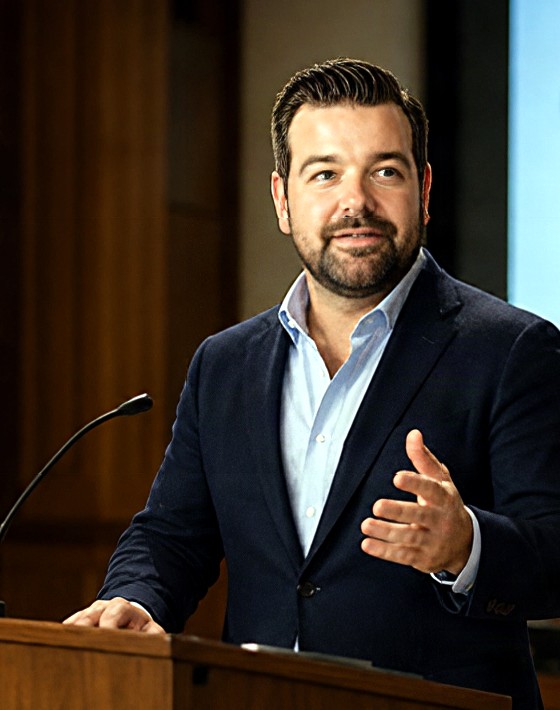
Ron Smith speaking on a panel
New in Forbes · Editor's Choice
Not every fix is worth making before you sell. Which gaps to close, for which buyer, and which to leave alone.
Ron Smith, Founding Partner · Forbes Business Council

The frameworks the firm is built on, published under institutional byline, each one dated, numbered and open to challenge. The Institute writes in public so the work can be argued with.

Read the research
An open door

The method is also a book you can hold.

Not every owner is ready for a mandate, and not every question needs one. The same framework the firm runs on is published as the Off-Market Method: a book, a workbook and a program, so an owner can start with the thinking in their own hands. The same standard, a door that opens sooner.

The Off-Market Method, written down

Cordis is Latin for "of the heart." The name was chosen before the first mandate.

Our founder grew up inside a family HVAC business, where the people who ran it, the families who depended on it, and the town it served were never separate things. A decision made at a desk reached all three by the end of the week. That is the order the firm still works in. Establish what the numbers are protecting, then design the structure that protects it.

The approach
The next chapter

The reward for building something is the freedom to choose what comes next.

An owner who prepared walks in with clarity, is met at full value, and leaves with the proceeds protected and the decision made on their own terms. Not relief that it is over. Confidence about what follows.

One call, no charge. A read of the situation, and an honest recommendation.

A mandate, a study, or the name of somebody better suited. We take a mandate only where we can materially improve the outcome, and finding out costs nothing.