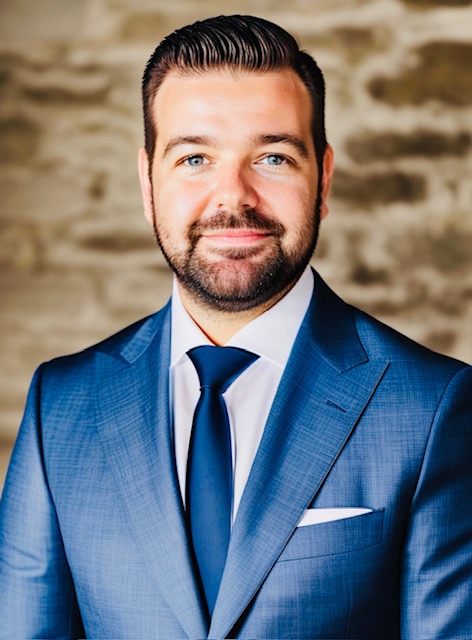
Founding Partner

Ron Smith

Founding Partner, Cordis Group
Editor-in-Chief, Cordis Institute
Publisher, Cordis Foundry

Decisions around growth, capital, ownership, and exit are expected to be rational. For those accountable for them, they rarely feel that way, they're personal, and the consequences last.

Ron grew up around a family business. He learned early that decisions don't stay confined to the business. They shape family dynamics, identity, and future options, often in ways that only become clear years later.

That perspective stayed with him when he began his career on Wall Street, in a special situations group focused on capital formation and complex transactions. From early-stage growth through liquidity events, companies were evaluated with institutional rigor: precision, downside protection, and objective analysis. Decisions were made through a buyer's lens, where structure and risk mattered as much as upside.

Later, at AllianceBernstein, he worked directly with founders and multi-generational families navigating growth, capital structure, ownership alignment, and exit timing, both before a transaction was on the table and after the deal closed, when the real implications began to surface.

After watching these decisions from every vantage point, Ron came back to one pattern impossible to ignore: regret rarely comes from price. It comes from blind spots, missed risks and trade-offs that quietly compress optionality and leverage over time, until an owner's hand is forced and reaction replaces choice.

Cordis was built for that moment.

Cordis exists as three connected efforts. Cordis Group is the advisory practice, working with founder-owned and family-owned businesses on ownership transitions. Cordis Institute is the independent research arm publishing peer-reviewed working papers on lower-middle-market exit dynamics through SSRN. Cordis Foundry is a publication-first business serving operator-founders, anchored on free editorial with paid cohorts and an annual summit.

Cordis's work begins when an owner is facing a real inflection point, whether that's preparing for a sale, evaluating growth or capital, or pressure-testing what comes next. The firm helps owners see their business the way a buyer will, surface the trade-offs that matter most, and decide whether moving forward actually makes sense. When the answer leads to a transaction, the team stays accountable end-to-end through execution.

Ron has watched owners do everything right operationally and still get boxed into outcomes they didn't intend, simply because key decisions were made too late or without full perspective. Cordis exists to correct that: bringing buyer-level clarity early, and taking responsibility through execution when ownership eventually changes hands.

What's one thing founders consistently miss when preparing to sell?

Most founders prepare for a sale without any buyer in mind at all. They improve the business in the ways they think make sense. New software. A second sales hire. A facility upgrade. All defensible operationally. None of them tied to what a buyer is actually going to pay for.

The ones who do think about a buyer usually picture one specific type. A strategic. A competitor. Maybe a customer. Those buyers still exist. They show up in lower-middle-market deals all the time. The problem is they're now one of five or six archetypes that could be at the table, each with a different underwriting model, each pricing different things differently.

The blind spot isn't picking the wrong buyer type. It's not doing the narrowing work in the first place. The buyer archetypes who'd actually want your business in your market right now are knowable. Once you've narrowed to that real set, the work gets specific. What are they valuing. What are they discounting. Where do you fit in their model. That's the gap table. It's a fluid target because buyer behavior shifts every quarter. But it's a narrowable one. Once you can see who's really likely to be at the table, you can prepare for them.

What is it about this work, specifically?

Both my parents still run the family HVAC business back in Vancouver. My sister and brother-in-law work in it too. I started washing trucks there when I was twelve, and I spent every summer in the shop through high school and college. So I know what it takes to keep something like that going. Service calls at night. Payroll on Friday no matter what. Customers who trust you because they've known the family for thirty years. Two generations of decisions stacked on top of each other to build something worth handing down.

What I've watched, over and over, is founders who built something exactly like that, who employ thirty or fifty or two hundred people, who anchor a town or a vendor chain or a family's future, get to the moment they've been working toward for two decades, and walk out of it sixty days later carrying a regret they can't quite articulate yet. Not because the deal was bad on paper. Because the deal was different from what they'd built their life around. The number was different. The structure was different. The hand-was-forced moment came and they didn't see it coming.

The work I do exists because the gap between what a founder builds and what they walk away with is the most preventable failure in this market. The information that closes that gap is knowable. It just doesn't reach the founder in a form they can act on. The work is making sure it does.

When is the right moment for a founder to start this conversation?

Now. Not because there's any urgency. Because you're already investing in the business, and you might as well do it with a buyer in mind.

Think about it like a house. If you're improving the place anyway, and there's any chance you'll sell it someday, you'd be intentional about it. You wouldn't sink real money into something that won't add value when you sell. You might still do it, because you like it, because your family likes it. But you'd be making that choice with eyes open, not by accident.

Same with a business. You're investing in it every quarter. Software. Hires. Equipment. Process. Whether you ever sell or not, getting an honest read on your buyer landscape and a gap table costs you very little. Then you decide which improvements move both numbers, the operating number and the sale number, and which ones only move one.

Whether you fix anything based on what you see is your call. At least you're being intentional about it.

When the work is good, what does that feel like?

The buyer comes back after the offer is signed with the pushback every founder dreads. A tighter read on the earnings. A lower working capital number at close. An earnout structured below the range we'd walked her through. None of it's a surprise.

The founder reads the email and doesn't call me with a question. She calls to tell me what's on the table and what she's already decided to push back on. She's lived with these specific lines for half a year. The decisions are already made. The negotiation is execution.

That call is what good feels like in the moment. The transaction stopped being something happening to her and became something she was steering. Most founders never get there.

The other half of the answer comes about two years later. She calls again. The business is still running under the new owner. The number that hit her account is doing what she planned for it to do. She doesn't regret the deal. The absence of that regret is the result we were working toward. The rehearsal was the work. The peace two years out is what the work was for.

What's something you've learned coaching that shows up in your work?

The worst time to teach somebody something is the moment they need to use it. That's true coaching hockey and it's true running an exit process.

In hockey you teach the breakout in October so the kid can run it in March without thinking. By the time he needs it on a real shift, the decision-making is already done. He's just executing.

A founder doesn't have time to learn how a buyer thinks once the LOI is on the table. The negotiation happens at the speed of conversation. If they haven't already absorbed the buyer's reasoning, they can't respond to it in real time. They freeze or react. Both leave money on the table.

Coaching kids taught me that preparation is the entire game. The work is making sure my founders show up to negotiation the way I want my kids to show up to a playoff shift. Already knowing what to do.